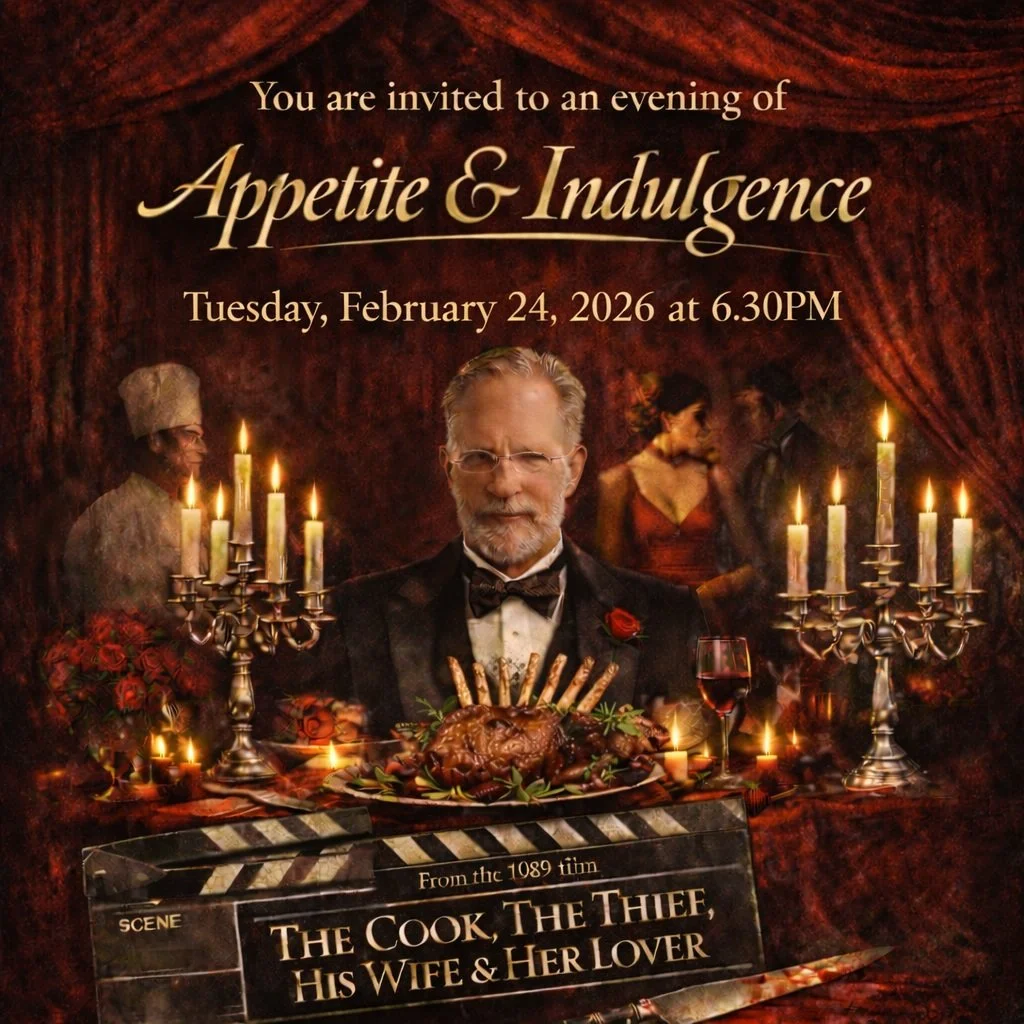
Appetite & Indulgence 2026
A CELEBRATION OF THE 1989 FILM “THE COOK, THE THIEF, HIS WIFE & HER LOVER”
Tuesday, February 24, 2026
RESERVATIONS CLOSE AT NOON ON FRIDAY, FEBRUARY 20, 2026
ATTIRE: Black tie or attire inspired by characters or palettes from the film encouraged.
6:30PM to 11:00PM
PHOTOGRAPHY WELCOMED — CAPTURE BUT DO NOT INTERRUPT THE EVENING
Questions: email rsvp@rooseveltlibrary.com
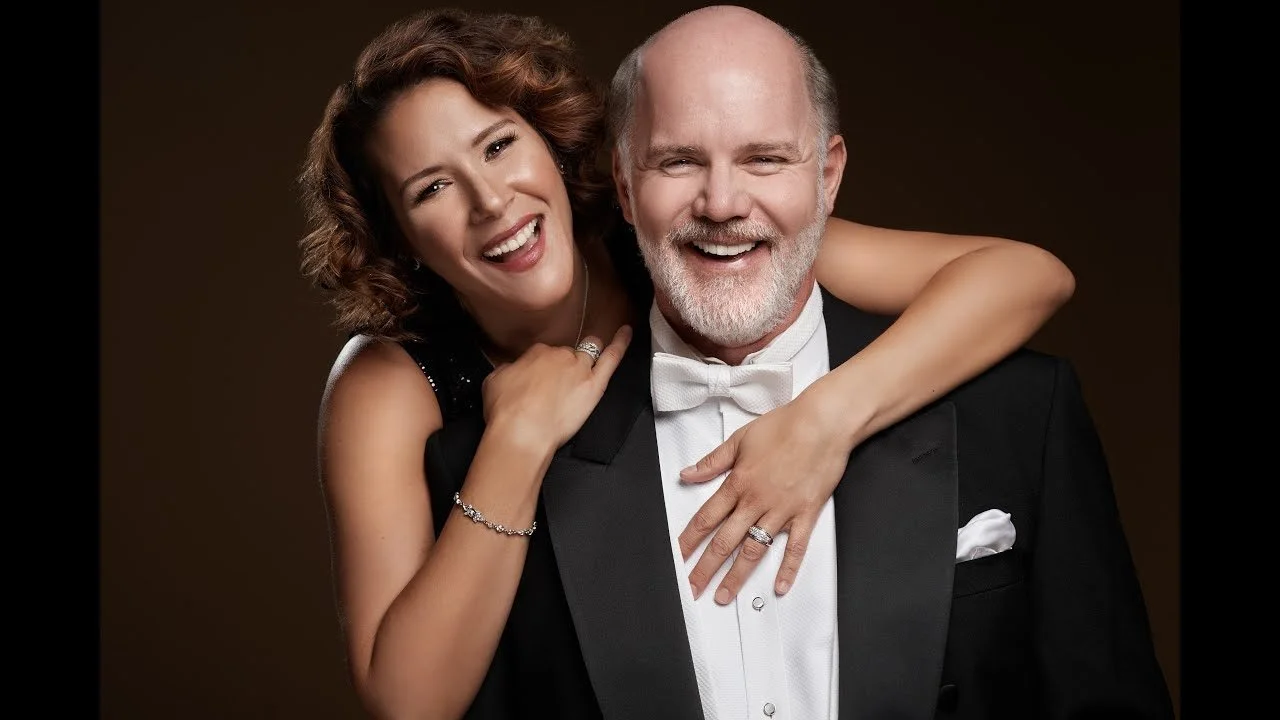
Musical Interlude
Featuring opera singers Danielle Talamantes & Kerry Wilkerson.
Reserve Your Place By Clicking the Cloche
Evening Itinerary
6:30 PM - Guests arrive and are received downstairs. Coats are removed, costumes revealed, and the evening begins with an aperitif and a small opening bite.
7:00 PM - Guests gather for a brief culinary prologue in the kitchen, setting the tone for the night through ritual, restraint, and anticipation.
7:30 PM - Guests transition to the dining room for seating.
7:45 PM - Dinner is served in multiple courses at a measured pace.
9:45 PM - Cheese, dessert, and espresso conclude the evening.
MENU
Twice-baked Crab Soufflé
Gruyère - Fresh Herbs - Crème fraiche
❦
Grilled Tiger Prawn Salad
Citrus Vinaigrette - Fennel - Chives
❦
Arancini
Smoked Breast of Chicken - Parmigiano-Reggiano - Aged White Cheddar
Saffron Sauce
❦
Braised Wagyu Beef Short Ribs
Whipped Potatoes - Grilled Asparagus
❦
Cheese & Charcuterie Course
Délice de Bourgogne - Tête de Moine Rosettes - Morbier
Jamón Ibérico, hand-carved
Italian Baguette - Fig Preserves
❦
Duo au Chocolat
Valrhona Dark Chocolate Mousse
Espresso
Wine and Cocktails Throughout the Evening
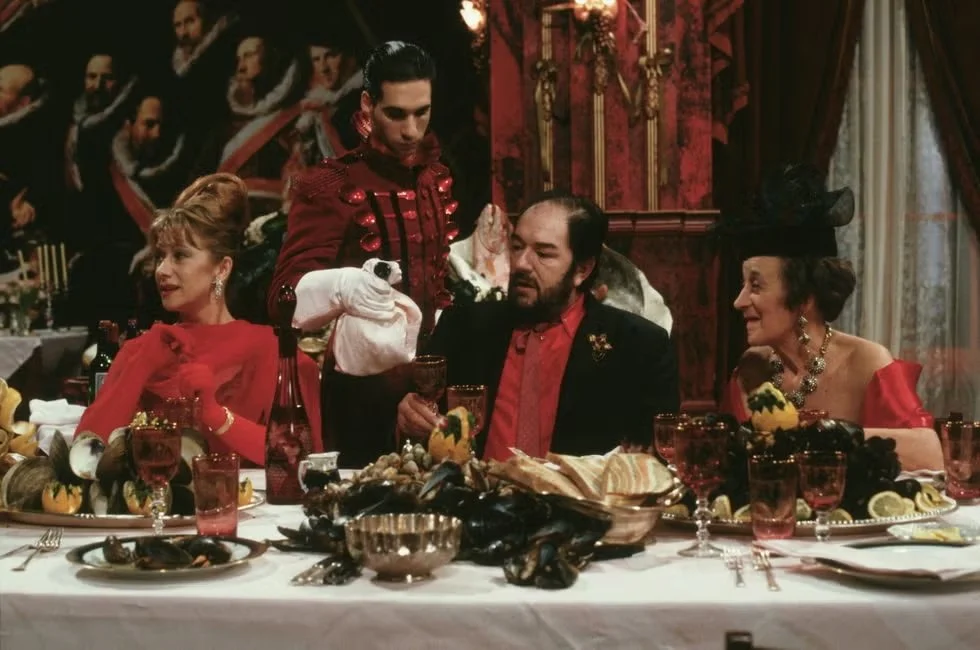
The service uniforms in Peter Greenaway's The Cook, The Thief, His Wife & Her Lover (1989) were designed by Jean Paul Gaultier and are characterized as theatrical, surreal, and futuristic, designed to blend in with the lavish, monochromatic red dining room of the restaurant Le Hollandais.
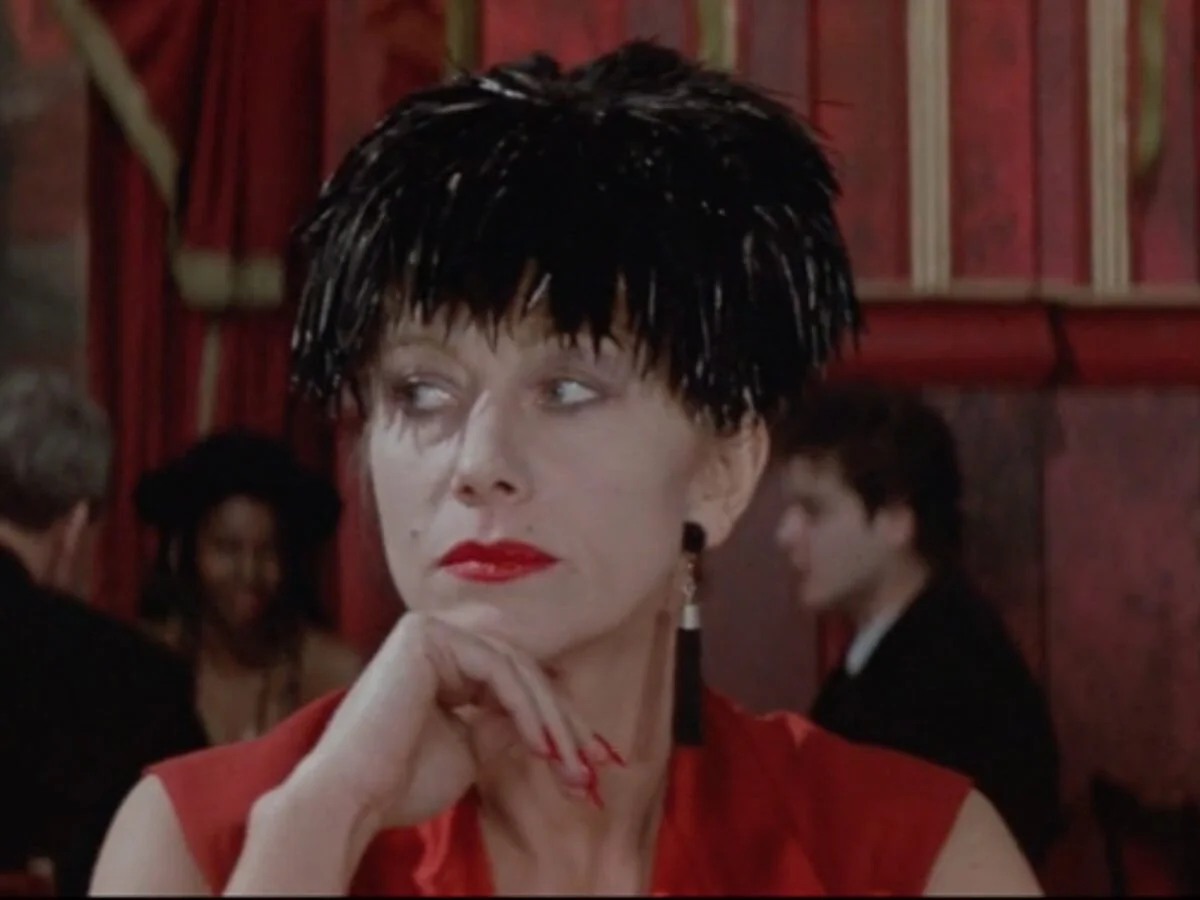
In The Cook, the Thief, His Wife & Her Lover (1989), Georgina (Helen Mirren) wearing the black feather hat represents her as a trapped, mourning figure—a "black widow" figure in waiting—combining deep ennui, shame, and simmering resilience. The hat signifies her attempt to shield herself from her brutal husband, highlighting her role as a sophisticated victim in a violent world.
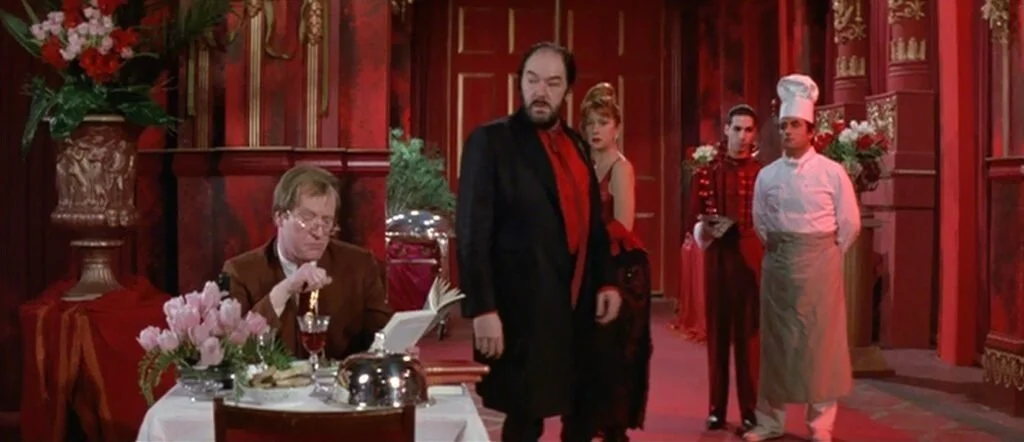
In The Cook, the Thief, His Wife & Her Lover (1989), the characters are generally interpreted as allegorical figures representing sectors of British society during the Thatcher era. The Cook (Richard) represents the civilized, skilled, and nurturing artist or intellectual, forced to collaborate with a brutal regime while maintaining a secret, defiant safe haven. The Lover (Michael) represents the ineffectual, intellectual leftist opposition, offering romance and culture but ultimately failing to act against, or survive, the raw power of the oppressor.
“The Cook, the Thief, His Wife & Her Lover (1989), directed by Inspired by The Cook, The Thief, His Wife & Her Lover, this event draws on Peter Greenaway’s visually operatic exploration of power, desire, excess, and revenge, where food, color, and ritual become instruments of storytelling. Set against the backdrop of an opulent French restaurant, the film is renowned for its painterly compositions, baroque theatricality, and bold use of color to signal shifts in mood and morality. Guests are invited to immerse themselves in this heightened world, whether through atmosphere, cuisine, or costume, and may choose to dress as characters from the film—including the unforgettable presence of Helen Mirren, whose performance as Georgina embodies both elegance and defiance. The evening embraces the film’s tension between refinement and brutality, transforming dinner into an experience where beauty is deliberate, indulgence is celebrated, and nothing is merely decorative.
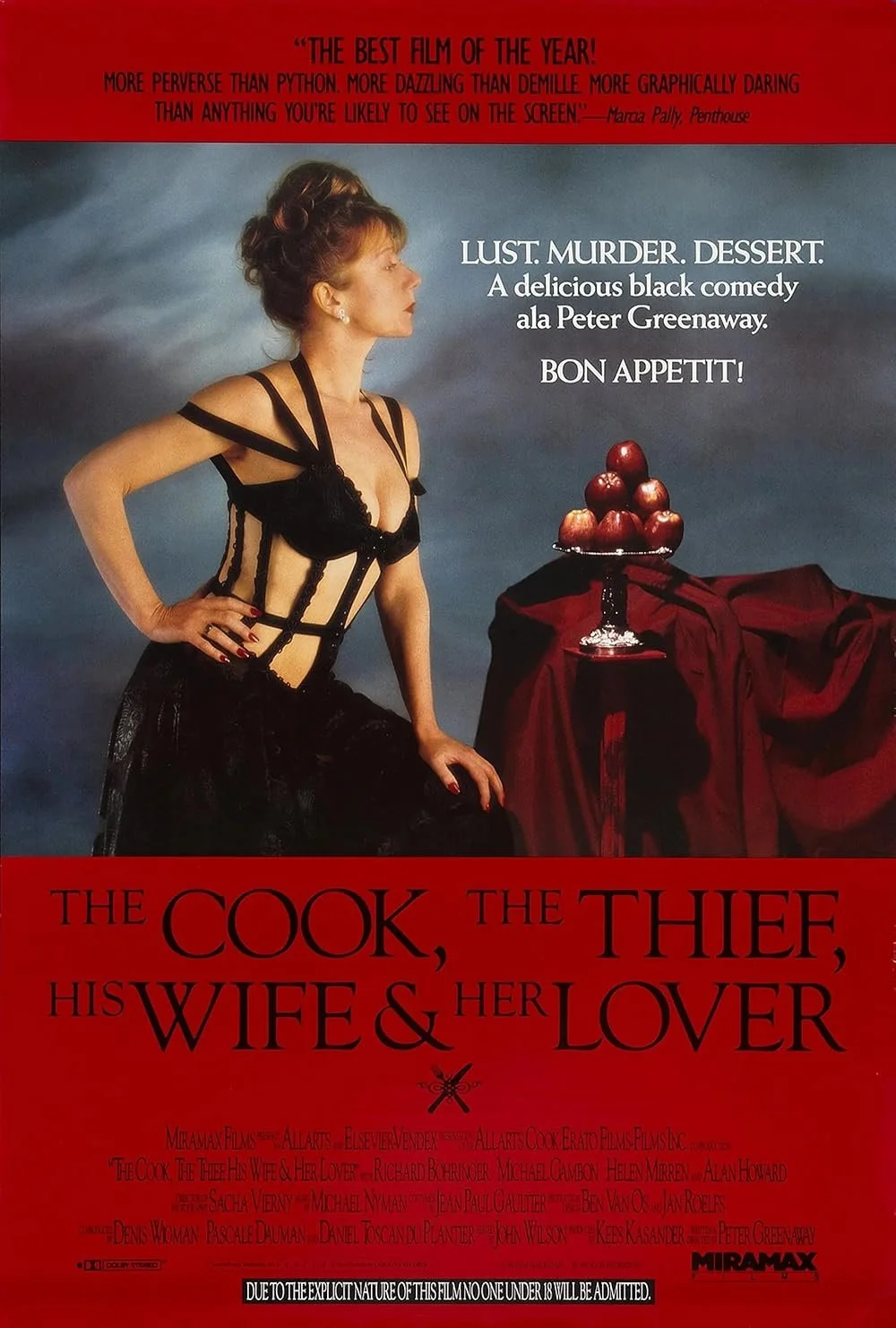
Peter Greenaway’s 1989 film The Cook, the Thief, His Wife & Her Lover has a strong cult following. Renowned for its shocking, visceral nature, painterly visuals reminiscent of Caravaggio, and lavish costumes designed by Jean Paul Gaultier, it is considered a dark, stylish satire and a landmark of British cinema.
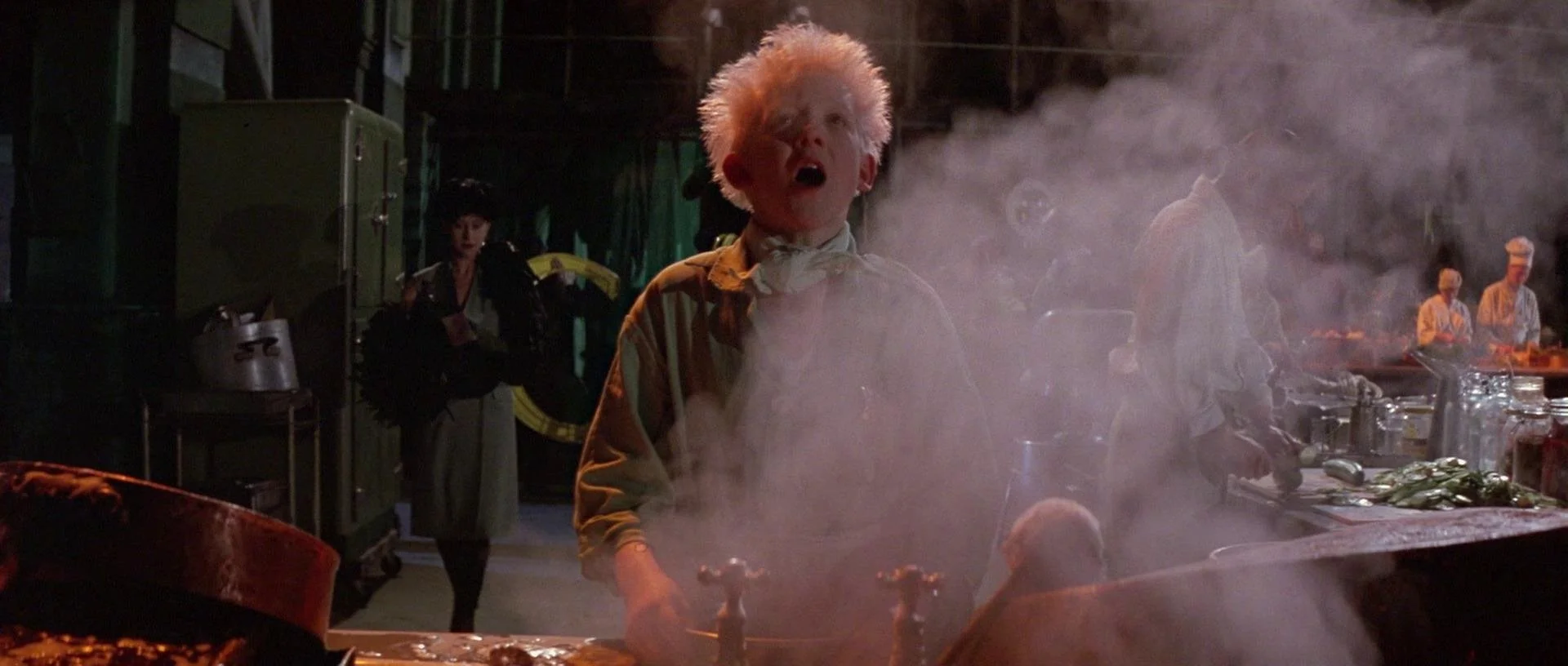
The scullery boy in The Cook, the Thief, His Wife & Her Lover (1989) is characterized by his angelic, treble voice, often heard singing the Miserere in the kitchen. He acts as a stark, innocent contrast to the surrounding scenes of debauchery and violence, serving as a symbolic voice of conscience or a lament for the corruption occurring in the restaurant.
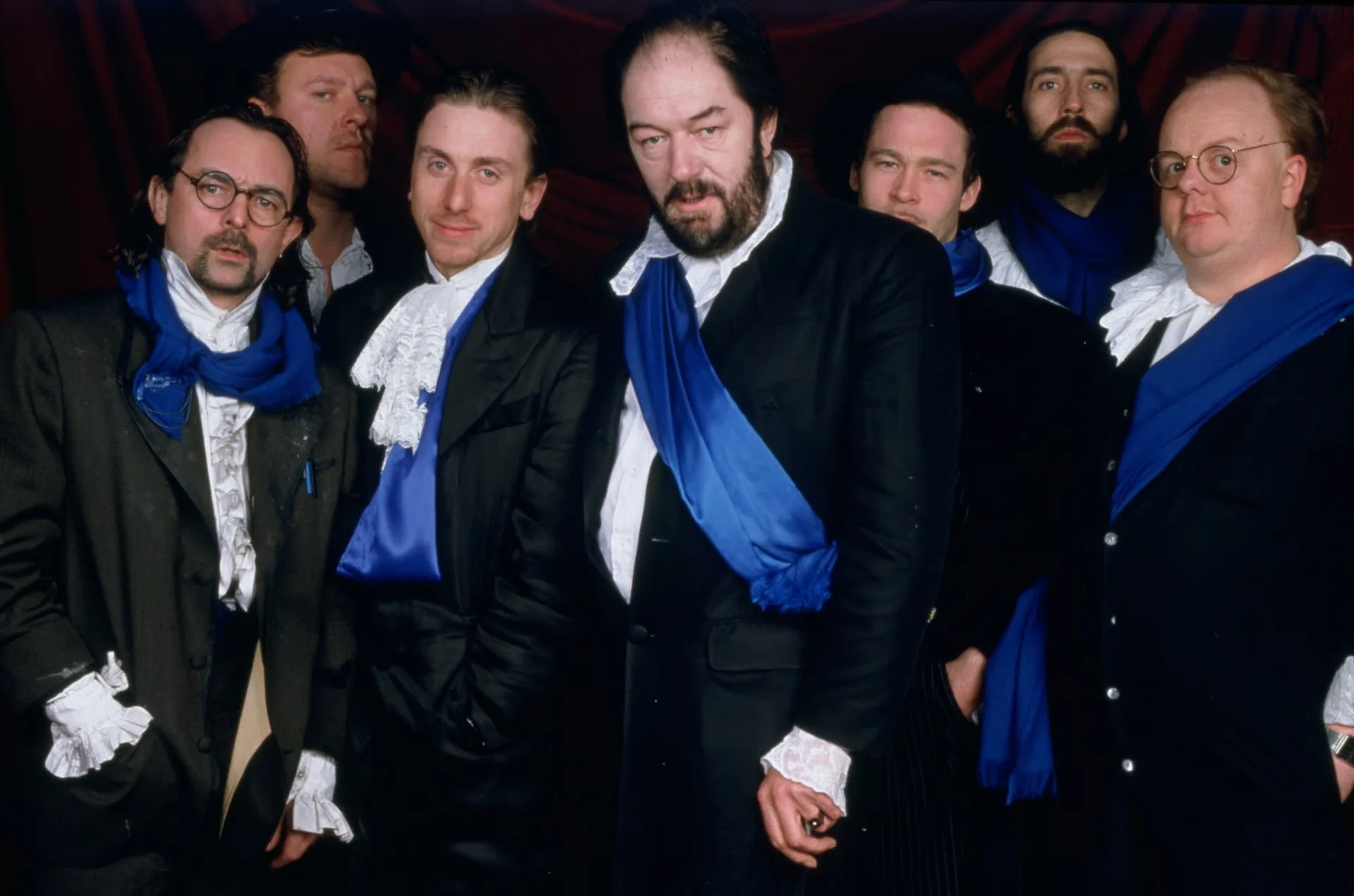
In The Cook, the Thief, His Wife & Her Lover (1989), when the Thief (Albert Spica, played by Michael Gambon) wears a blue sash—specifically during the opening scenes at the back of the "Le Hollandais" restaurant—he is described as a brutal, vulgar, and commanding figure.
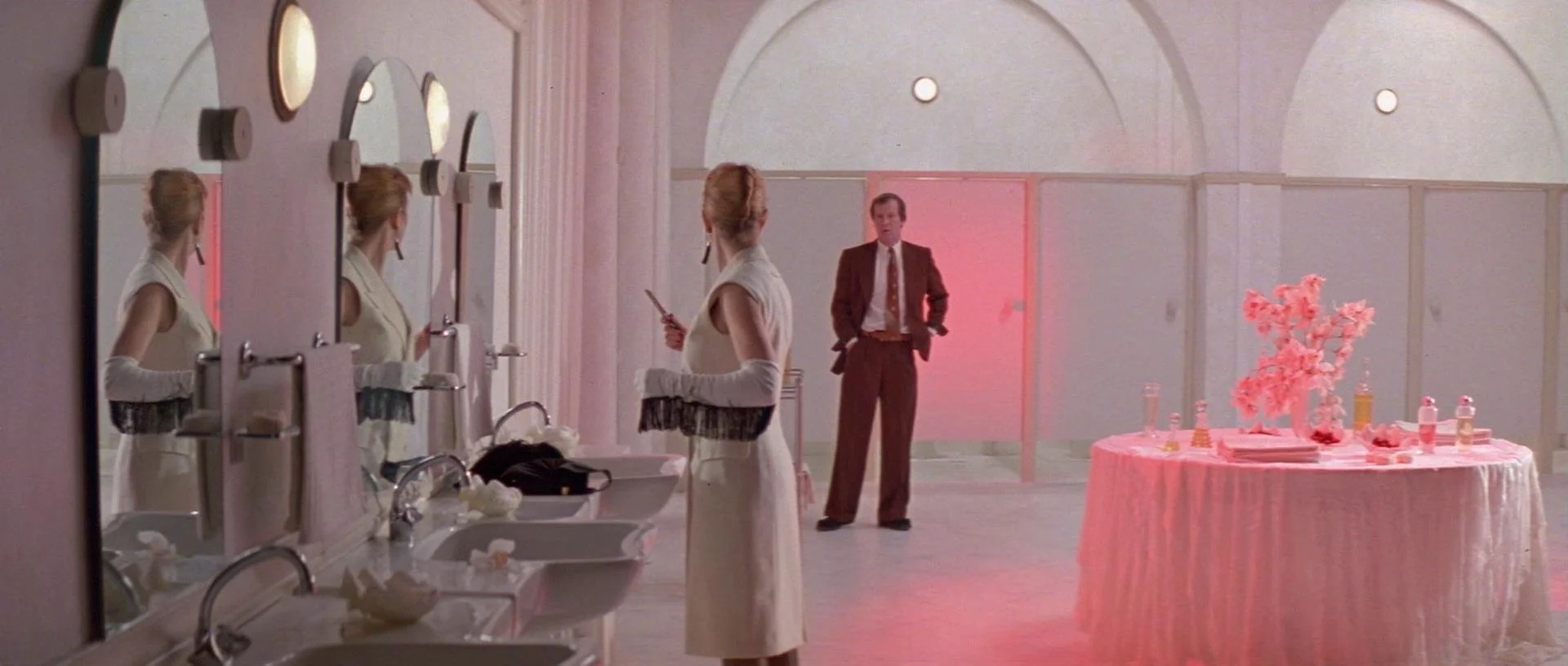
In The Cook, the Thief, His Wife & Her Lover, colors change to reflect the characters' psychological states, signal thematic shifts, and define the emotional tone of specific, color-coded, painterly sets inspired by Dutch masters. The colors, designed by Jean Paul Gaultier, shift to match the room a character is in—red for the violent dining room, white for the toilets, and green for the kitchen—signifying the intense,, almost suffocating atmosphere.
The restaurant bathroom serves as a crucial, filthy sanctuary where Georgina (the wife) and Michael (her lover) escape to engage in passionate illicit sexual encounters. It acts as a stark, intimate counterpoint to the violent, public, and brightly lit dining room.
PARKING AT THE ROOSEVELT LIBRARY
The Roosevelt Library has about 50 complimentary self-parking spaces available to guests. Street parking is often available. Vehicles are not to be left in the Roosevelt Library parking lot overnight. An off-duty SAPD officer will be monitoring the parking lot throughout the event. The Roosevelt Library will not be liable for theft or damages to vehicles or the contents of vehicles.
Tickets are non-refundable; transfers permitted.